
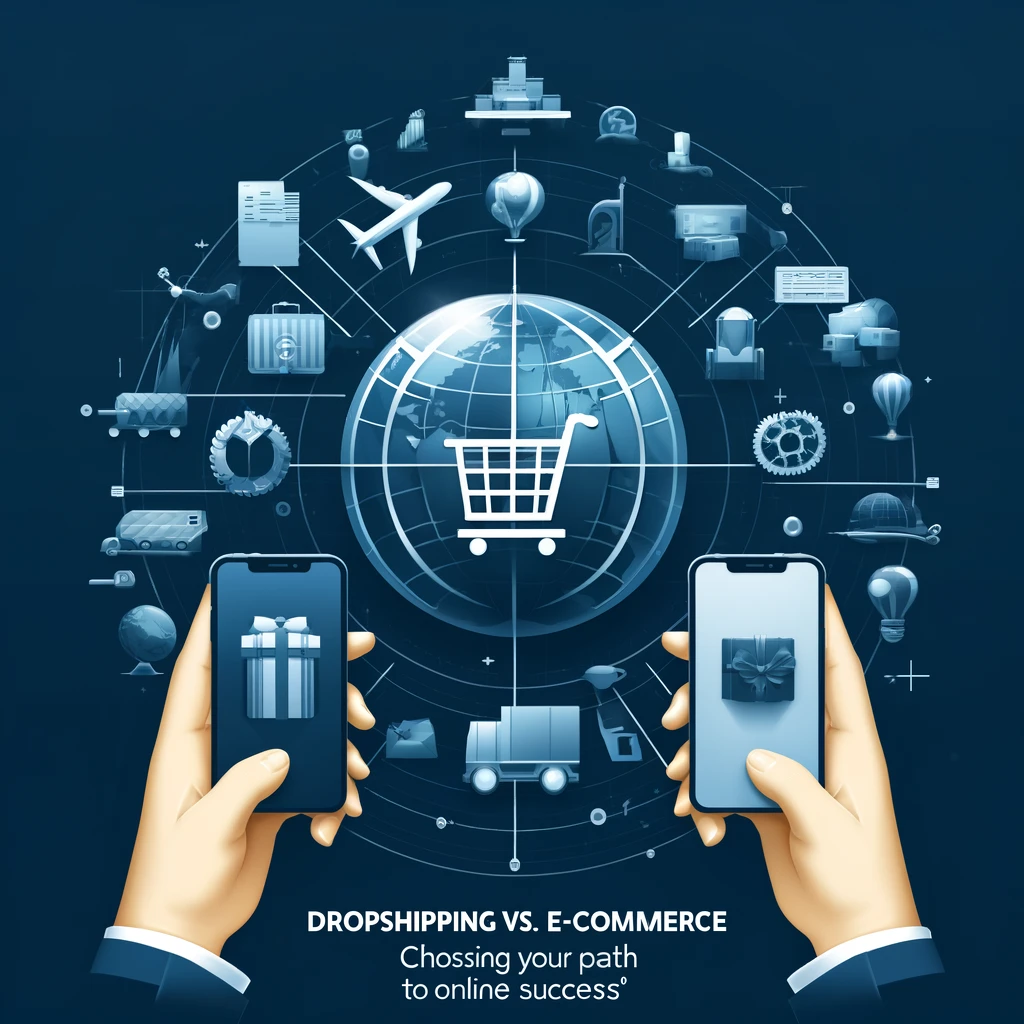
Introduction: Dropshipping vs. E-commerce – Which Path to Choose?
Dropshipping and traditional e-commerce are two big players in the online business world. Each offers a unique way to make money online. But they work differently and come with their own set of benefits and challenges.
Dropshipping is all about selling products without holding inventory. You take orders, and a third-party supplier ships the product directly to the customer. It’s a low-cost, low-risk way to start selling online.
Traditional E-commerce, on the other hand, involves buying products in bulk, storing them, and handling all the shipping yourself. This model gives you more control over your products and brand, but it requires more upfront investment and effort.
Understanding the differences between these models is crucial. Choosing the right one can save you time, money, and headaches. It helps you align your business goals with the best strategy to achieve them. Let’s break down both models to see which one fits your needs best.
Table of Contents
Defining the Models

Dropshipping
Dropshipping is a straightforward business model. Here’s how it works: You set up an online store and list products for sale. But unlike traditional stores, you don’t keep these products in stock. Instead, when a customer makes a purchase, you forward the order to a third-party supplier. This supplier then ships the product directly to the customer. You handle the sales and customer service, but never actually touch the product.
Traditional E-commerce
Traditional e-commerce is more hands-on. In this model, you buy products in bulk from manufacturers or wholesalers. You store these products in your own warehouse or storage space. When a customer places an order, you’re responsible for packing and shipping the product to them. This approach gives you full control over your inventory, packaging, and shipping processes. It also allows for more customization and branding opportunities.
Both models have their unique workflows and benefits. Dropshipping is all about simplicity and low risk. Traditional e-commerce offers control and the potential for higher profit margins. Understanding these foundational differences is key to choosing the right model for your business.
Startup Costs and Overhead

Dropshipping: Low Entry Cost
One of the biggest advantages of dropshipping is the low startup cost. Here’s why:
- No Inventory Needed: You don’t need to buy products upfront. You only purchase a product when you have a sale. This cuts down on initial expenses significantly.
- Minimal Setup Costs: Setting up an online store is relatively inexpensive. You’ll need a website, which can be created using platforms like Shopify or WooCommerce. These services have low monthly fees.
- No Warehousing: Since you don’t store products, there’s no need to invest in a warehouse or pay for storage space.
Traditional E-commerce: Higher Entry Cost
Starting a traditional e-commerce business requires a larger initial investment:
- Buying Inventory: You need to buy products in bulk upfront. This means spending a significant amount of money before making your first sale.
- Warehousing: You’ll need a place to store your products. This could mean renting a warehouse or using part of your home, which comes with its own costs.
- Setup Costs: Besides a website, you might need to invest in other tools for inventory management, shipping, and handling.
Ongoing Overhead Costs
Dropshipping:
- Higher Per Item Costs: Dropshipping can have higher per-item costs compared to buying in bulk. This is because suppliers often charge more to handle the shipping and fulfillment for each individual order.
- Less Control Over Shipping: Since the supplier handles the shipping, you have less control over the shipping process and times. This can lead to longer delivery times and potential customer dissatisfaction.
- Dependence on Suppliers: Your business relies heavily on third-party suppliers. Any issues they face, like stock shortages or delays, can directly impact your business.
Traditional E-commerce:
- Inventory Management: Managing inventory means you need systems to track stock levels, manage orders, and handle returns. This requires both time and money.
- Warehousing Costs: Ongoing costs include rent for storage space, utilities, and possibly hiring staff to manage the warehouse.
- Shipping and Handling: You’ll need to buy packing materials and possibly hire staff to handle the shipping. This adds to your overhead but gives you control over the process and can enhance customer satisfaction.
In summary, dropshipping offers a lower-cost entry into e-commerce with fewer upfront and ongoing expenses, making it accessible for beginners. However, it comes with higher per-item costs and less control over the shipping process. Traditional e-commerce requires a bigger initial investment and has higher ongoing overhead costs but offers greater control over inventory, shipping, and customer experience. Understanding these differences is crucial in deciding which model aligns best with your business goals and resources.
Profit Margins and Scalability

Profit Margins
Dropshipping:
- Higher Per-Item Costs: In dropshipping, suppliers handle the fulfillment process, which means they often charge more per item to cover their costs. This reduces your profit margin compared to traditional e-commerce.
- Competitive Pricing: The ease of entry into dropshipping means there’s often a lot of competition, which can drive prices down and further squeeze margins.
- No Bulk Discounts: Since you’re not buying in bulk, you miss out on the discounts that traditional e-commerce retailers get. This can make it harder to compete on price while maintaining a healthy margin.
Traditional E-commerce:
- Bulk Purchasing: Buying inventory in bulk usually means you get a lower cost per item. This can significantly increase your profit margins.
- Control Over Pricing: With greater control over your inventory, you can better manage pricing strategies, promotions, and discounts to maximize your profits.
- Value-Added Services: You can offer additional services like custom packaging, faster shipping, and bundling, which can justify higher prices and boost margins.
Scalability
Dropshipping:
- Easy to Scale: Dropshipping is highly scalable. You can add new products to your store without worrying about inventory or warehousing. As long as your suppliers can handle the orders, you can scale up quickly.
- Supplier Reliability: Your ability to scale depends on your suppliers. If they can’t keep up with your growing order volume, it can lead to delays and unhappy customers.
- Low Operational Complexity: Since you’re not dealing with inventory or shipping, the operational side of scaling up is much simpler compared to traditional e-commerce.
Traditional E-commerce:
- Inventory Management: Scaling up in traditional e-commerce means managing more inventory, which requires more space and better systems to keep track of stock levels.
- Logistical Complexity: As your business grows, so do the complexities of managing storage, shipping, and returns. You might need to hire more staff or invest in more advanced logistics solutions.
- Supplier Relationships: Maintaining good relationships with suppliers is crucial. As you scale, you’ll need reliable suppliers who can provide consistent quality and handle larger orders.
Conclusion
Dropshipping:
- Offers lower profit margins due to higher per-item costs and intense competition.
- Easier to scale with less operational complexity but highly dependent on supplier reliability.
Traditional E-commerce:
- Potential for higher profit margins thanks to bulk purchasing and greater control over pricing.
- More challenging to scale due to the need for inventory management and logistical solutions but allows for better customer experience and service differentiation.
Choosing the right model depends on your business goals, resources, and willingness to handle the complexities of each approach. Dropshipping is great for getting started quickly and scaling with minimal upfront investment, while traditional e-commerce offers higher profit potential and control but requires more capital and effort to grow.
Control and Branding
Dropshipping: Limited Control
Branding:
- Supplier Dependence: In dropshipping, the products come directly from third-party suppliers. This limits your ability to customize packaging, include branded inserts, or control the unboxing experience, which are key elements of branding.
- Generic Products: Often, dropshipped products are generic and can be sold by multiple retailers. This makes it harder to create a unique brand identity.
Customer Experience:
- Inconsistent Quality: Because you rely on suppliers for product fulfillment, you have less control over product quality. Variations in quality can lead to inconsistent customer experiences.
- Shipping Times: Longer and less predictable shipping times, especially if suppliers are overseas, can negatively impact customer satisfaction.
- Limited After-Sales Service: Handling returns and customer service issues can be more complex, as you need to coordinate with your suppliers.
Brand Loyalty and Customer Satisfaction:
- Challenges in Building Loyalty: Without control over the product and packaging, it’s harder to build a strong, memorable brand. Customers might not differentiate your store from others selling the same products.
- Customer Dissatisfaction Risks: Quality issues and shipping delays can lead to higher rates of customer dissatisfaction and returns, impacting repeat business.
Traditional E-commerce: Greater Control
Branding:
- Custom Packaging: With traditional e-commerce, you control the entire product presentation. You can design custom packaging, include branded materials, and create a memorable unboxing experience.
- Unique Products: You can source unique products or create your own, making it easier to establish a distinct brand identity that stands out from competitors.
Customer Experience:
- Quality Control: By managing inventory yourself, you can ensure that every product meets your quality standards before it reaches the customer.
- Faster Shipping: Since you handle fulfillment, you can offer faster and more reliable shipping options, greatly enhancing the customer experience.
- Comprehensive After-Sales Service: Managing returns and customer service in-house allows for quicker resolutions and a better overall customer service experience.
Brand Loyalty and Customer Satisfaction:
- Stronger Brand Loyalty: Greater control over branding and customer experience helps build a stronger, more recognizable brand. This can lead to higher customer loyalty and more repeat business.
- Enhanced Customer Satisfaction: Consistent product quality and faster shipping contribute to higher levels of customer satisfaction, which is crucial for building a positive reputation and encouraging repeat purchases.
Conclusion
Dropshipping:
- Offers limited control over branding and customer experience due to reliance on third-party suppliers.
- Can struggle with building strong brand loyalty and ensuring consistent customer satisfaction.
Traditional E-commerce:
- Provides greater control over all aspects of branding and customer experience, from packaging to shipping.
- More likely to build strong brand loyalty and achieve higher customer satisfaction through consistent quality and service.
Choosing between dropshipping and traditional e-commerce depends on your priorities. If building a strong, unique brand with a controlled customer experience is essential, traditional e-commerce is the way to go. However, if you prioritize lower startup costs and ease of management, dropshipping may be a better fit, despite the limitations in control and branding.
Risks and Challenges

Dropshipping: Unique Risks
Supplier Dependency:
- Reliability Issues: Your business heavily relies on third-party suppliers. If a supplier fails to deliver on time, runs out of stock, or provides poor quality products, it directly impacts your reputation and customer satisfaction.
- Lack of Control: You have limited control over the fulfillment process, including shipping times and packaging quality, which can lead to inconsistent customer experiences.
Profit Margins:
- Higher Per-Item Costs: Since suppliers handle the fulfillment, they often charge higher prices per item compared to bulk purchasing, which can squeeze your profit margins.
- Shipping Costs: International shipping can be expensive and slow, potentially leading to higher costs and longer delivery times.
Competition and Market Saturation:
- Low Entry Barriers: Dropshipping has low startup costs, leading to high competition. Many sellers might offer the same products, making it hard to stand out.
- Price Wars: To attract customers, sellers might engage in price wars, further reducing profit margins.
Effective Marketing Strategies:
- Standing Out: With many similar products on the market, effective marketing is crucial to differentiate your store. This requires investing in SEO, social media marketing, and potentially paid advertising.
Traditional E-commerce: Unique Risks
Financial Risk:
- Upfront Investment: You need to invest significantly upfront to purchase inventory. This capital is tied up until the products are sold, creating a financial risk if items don’t sell as expected.
- Unsold Inventory: If products don’t sell, you’re left with unsold inventory that takes up space and represents a sunk cost.
Inventory Management:
- Storage Costs: Managing a warehouse or storage space comes with ongoing costs for rent, utilities, and staffing.
- Logistics Complexity: Handling the logistics of storing, picking, packing, and shipping products requires efficient systems and processes, adding to the complexity and cost of the business.
Competition and Market Saturation:
- High Competition: Like dropshipping, traditional e-commerce faces intense competition. Market saturation can make it difficult to find profitable niches.
- Marketing Investment: Effective marketing strategies are essential to drive traffic and sales. This includes SEO, content marketing, social media, and paid advertising.
Common Challenges
Competition:
- Market Saturation: Both models face the challenge of market saturation, where too many sellers are offering similar products, making it hard to stand out and attract customers.
- Differentiation: Finding unique selling points and effectively communicating them through marketing is crucial for both dropshipping and traditional e-commerce.
Effective Marketing Strategies:
- SEO and Content Marketing: Both models require strong SEO and content marketing strategies to drive organic traffic. This involves keyword research, creating valuable content, and optimizing product listings.
- Social Media and Advertising: Leveraging social media platforms and running targeted advertising campaigns can help reach and engage potential customers.
Customer Service:
- Handling Inquiries and Complaints: Providing excellent customer service is key to maintaining a good reputation. This includes responding promptly to inquiries, resolving issues, and handling returns efficiently.
Conclusion
Dropshipping:
- Faces unique risks like supplier dependency and higher per-item costs.
- Requires effective marketing to stand out in a highly competitive market.
Traditional E-commerce:
- Involves financial risks due to upfront inventory investment and potential unsold stock.
- Needs efficient inventory management and logistics systems to handle operations smoothly.
Both models come with their own set of challenges. Success in either dropshipping or traditional e-commerce requires a clear understanding of these risks and the implementation of effective strategies to mitigate them. Your choice will depend on your resources, risk tolerance, and business goals.
Ideal Scenarios for Each Model
Dropshipping: Best Scenarios and Product Types
Ideal Scenarios:
- Low Startup Capital: Dropshipping is perfect for entrepreneurs who have limited funds to invest upfront. With no need to buy inventory, you can start selling with minimal financial risk.
- Testing New Markets: If you’re exploring new markets or product categories, dropshipping allows you to test without committing significant resources. You can gauge demand before investing in inventory.
- Scalable Operations: Dropshipping is highly scalable. Since you don’t handle inventory, adding new products and expanding your business is straightforward.
Types of Products:
- Niche Products: Items that cater to specific interests or hobbies, like unique gadgets, specialty clothing, or custom accessories, can do well. These products often have dedicated customer bases willing to pay a premium.
- Lightweight and Non-Fragile Items: Products that are easy and inexpensive to ship, like phone accessories, clothing, and small electronics, are ideal. They reduce shipping costs and the risk of damage during transit.
- Trend-Driven Products: Items that capitalize on current trends or fads can be lucrative. Since you don’t need to hold inventory, you can quickly adapt to market trends and offer the latest products.
Traditional E-commerce: Best Scenarios and Product Types
Ideal Scenarios:
- Established Brand Presence: If you already have a brand with a loyal customer base, traditional e-commerce allows you to offer a consistent and high-quality customer experience.
- Higher Profit Margins: With the ability to purchase inventory in bulk, traditional e-commerce can be more profitable. It’s suitable if you have the capital to invest upfront and manage inventory.
- Customized Products: If your business model involves offering customized or personalized products, traditional e-commerce gives you the control needed to manage these operations effectively.
Types of Products:
- High-Margin Items: Products with high-profit margins, such as branded electronics, luxury goods, and custom furniture, benefit from bulk purchasing and inventory control.
- Fragile or Oversized Items: Items that require careful handling and packaging, like glassware or furniture, are better suited for traditional e-commerce, where you can ensure quality control.
- Subscription Boxes: If your business model includes subscription services, managing your own inventory allows you to create curated boxes and deliver a consistent experience.
Conclusion
Dropshipping:
- Ideal for low-capital startups, testing new markets, and selling niche or trend-driven products.
- Best suited for lightweight, non-fragile items that are easy to ship.
Traditional E-commerce:
- Suitable for businesses with established brands, higher upfront capital, and a focus on high-margin or customized products.
- Works well for fragile, oversized items, and subscription box models where quality control is critical.
Choosing the right model depends on your specific business situation, including your financial resources, target market, and the types of products you plan to sell. Understanding these ideal scenarios can help you align your business strategy with the most suitable e-commerce model for achieving your goals.
Conclusion: Making the Right Choice for Your Online Business
In this article, we’ve explored the key differences between dropshipping and traditional e-commerce. Both models offer unique advantages and come with their own set of challenges.
Dropshipping:
- Low Startup Costs: Ideal for entrepreneurs with limited capital, dropshipping allows you to start selling without the need to invest in inventory upfront.
- Ease of Scalability: It’s easier to scale, add new products, and test new markets without significant financial risk.
- Limited Control: You rely on third-party suppliers, which means less control over product quality, shipping times, and customer experience.
Traditional E-commerce:
- Higher Profit Margins: By purchasing inventory in bulk, you can achieve higher profit margins.
- Greater Control: You have full control over product quality, packaging, and the overall customer experience.
- Higher Initial Investment: Requires more capital upfront for inventory and warehousing, along with managing logistics and potential unsold stock.
Choosing the Right Model:
- Assess Your Capital: If you have limited funds, dropshipping might be the better option. It allows you to start with minimal financial risk and scale as you grow.
- Control and Branding: If maintaining control over your product and customer experience is crucial, traditional e-commerce is the way to go. It allows for better branding and quality assurance.
- Product Type: Consider the type of products you want to sell. Lightweight, non-fragile, and trend-driven items work well with dropshipping. High-margin, customized, or fragile items are better suited for traditional e-commerce.
- Long-Term Goals: Think about your long-term business goals. If you aim to build a strong, recognizable brand with loyal customers, traditional e-commerce offers the control needed to achieve this.
Ultimately, the choice between dropshipping and traditional e-commerce depends on your business needs, goals, and available resources. By understanding the strengths and limitations of each model, you can make an informed decision that aligns with your vision for success in the online marketplace.
Related Content:
5 Side Hustle Ideas for Students
Reverse Dropshipping: A New Twist on Traditional E-Commerce
Amazon FBA vs Dropshipping: Which E-commerce Model Suits You Best?
Commonly Asked Questions
No, dropshipping is a subset of e-commerce, but they are not the same thing. E-commerce encompasses all forms of buying and selling goods or services over the internet. This includes a variety of business models such as traditional retail, wholesale, direct-to-consumer, subscription services, and more.
Dropshipping is a specific type of e-commerce where the seller does not keep any inventory. Instead, when an order is placed, the seller purchases the item from a third-party supplier who then ships it directly to the customer. The seller never handles the product directly.
The profitability of e-commerce vs. dropshipping depends on several factors, including business model, product type, market demand, and individual business strategies.
Traditional E-commerce:
- Higher Profit Margins: Typically offers higher profit margins due to bulk purchasing and lower per-item costs.
- Control Over Branding: Greater control over branding, packaging, and customer experience can lead to stronger brand loyalty and repeat customers.
- Higher Initial Costs: Requires significant upfront investment in inventory and warehousing.
Dropshipping:
- Lower Startup Costs: Easier and cheaper to start since there’s no need to purchase inventory upfront.
- Lower Profit Margins: Generally, lower profit margins because suppliers handle fulfillment and may charge higher per-item costs.
- Less Control: Limited control over product quality and shipping, which can affect customer satisfaction.
In general, traditional e-commerce can be more profitable in the long run due to higher margins and better control over the customer experience. However, dropshipping can be more profitable for individuals looking for a low-cost entry into e-commerce without significant initial investment.
Dropshipping is not illegal because it is simply a method of order fulfillment and a legitimate business model. It involves selling products without holding inventory, which is a standard practice in various industries. Here are a few reasons why it is legal:
- Contractual Agreements: Dropshipping operates based on legal agreements between the seller, supplier, and the customer. Each party fulfills their role within the bounds of these agreements.
- Consumer Protection: As long as the seller provides accurate product descriptions, fulfills orders as promised, and handles returns or issues according to consumer protection laws, dropshipping operates within legal boundaries.
- Business Regulations: Like any other business model, dropshipping must comply with local, national, and international business laws, including tax obligations, consumer rights, and import/export regulations.
The key to running a legal dropshipping business is transparency, honesty, and compliance with all applicable laws and regulations. Misrepresenting products, failing to deliver on promises, or violating consumer protection laws can lead to legal issues, but these are risks associated with any business model, not just dropshipping.


Leave a Reply