
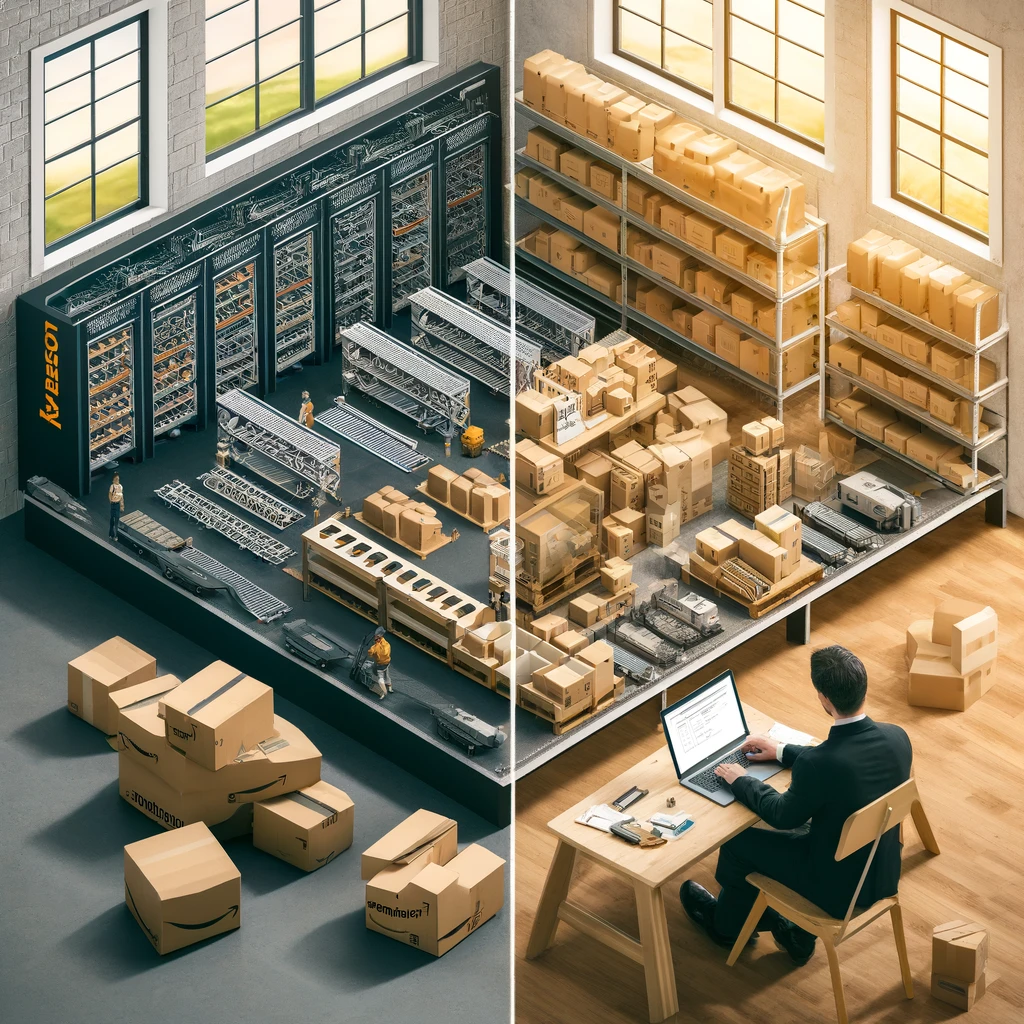
Introduction: Navigating the E-commerce Boom
E-commerce isn’t just booming; it’s revolutionizing how we buy and sell. From small startups to giant retailers, everyone’s getting a slice of this trillion-dollar industry. But not all e-commerce strategies are created equal. Two giants in this arena are Amazon FBA (Fulfillment by Amazon) and Dropshipping—each with its own rules, benefits, and challenges.
Amazon FBA lets you leverage Amazon’s massive platform. You sell, they ship. Products go from your hands to Amazon’s warehouses, and they take care of the rest—storage, shipping, customer service, you name it.
Dropshipping cuts out the middleman. You sell products that are shipped directly from the supplier to the customer. No stock, no warehousing—just pure selling.
Choosing the right model isn’t just a business decision; it’s about matching your goals, how much you’re willing to invest upfront, and how much risk you’re ready to handle. Let’s dive deep into Amazon FBA vs. Dropshipping and see which model fits your entrepreneurial spirit best. Ready to explore? Let’s get started.
Table of Contents
Section 1: Understanding Amazon FBA
How Amazon FBA Works
Imagine sending your products to Amazon’s warehouse. Once they’re there, Amazon takes over. They store your items, pack them up when sold, and ship them out. They even handle customer service and returns. It’s like having a powerhouse team without hiring a single employee.

Benefits of Amazon FBA
- Massive Reach: Tap into Amazon’s enormous customer base. Your products could be seen by millions.
- Prime Time: Products handled by FBA are eligible for Amazon Prime. That means faster shipping and more happy customers.
- Simplified Operations: Forget about the logistics nightmare. Amazon handles the heavy lifting, literally and figuratively.
Challenges of Amazon FBA
- Upfront Costs: You’ll need to buy your products and ship them to Amazon. That’s your money, tied up in inventory and shipping costs.
- Fees on Fees: Amazon isn’t doing this for free. There are storage fees, fulfillment fees, and long-term storage fees if your products don’t sell fast.
- Inventory Management: You need to keep a close eye on your inventory. Too much stock means higher fees, too little means missed sales.
Amazon FBA can be a game-changer if you have the resources to play. It’s perfect for those who want to scale quickly but comes with its own set of financial and managerial challenges.
Section 2: Exploring Dropshipping
How Dropshipping Works
Dropshipping turns traditional retail on its head. Instead of stocking products, you set up shop online and partner with suppliers. Here’s the kicker: you sell the products, but your suppliers ship them directly to your customers. You never even touch the inventory.

Advantages of Dropshipping
- Low Entry Barrier: Jump in without a huge upfront investment. No need to buy stock or manage a warehouse.
- Minimal Risk: Since you don’t stock the products, you’re not stuck with unsold inventory. This significantly reduces your financial risk.
- Hands-Off Operation: Shipping and inventory? Not your problem. Focus on customer service and marketing instead.
Drawbacks of Dropshipping
- Less Control: When you don’t handle the inventory or shipping, you’re at the mercy of your suppliers. If they mess up, it’s your reputation on the line.
- Dependence on Suppliers: Your entire business hinges on the reliability of your suppliers. If they have stock issues or shipping delays, you have customer complaints.
- Lower Profit Margins: Since it’s so easy to get into dropshipping, competition can be fierce, often driving prices—and profits—down.
Dropshipping offers an accessible pathway into e-commerce but requires a strategic approach to overcome its inherent challenges. It’s ideal for those who prefer a hands-off model and are adept at navigating customer relations and supplier management.
Section 3: Profitability Comparison
When choosing between Amazon FBA and Dropshipping, understanding how each model stacks up in terms of potential profitability is crucial. Let’s break down the financial aspects of each method, considering common expenses, profit margins, and scalability factors.

Amazon FBA Profitability
- Common Expenses: Initial costs include purchasing inventory and shipping it to Amazon. Ongoing expenses involve storage fees, fulfillment fees, and possibly long-term storage fees if items don’t sell quickly.
- Profit Margins: While the costs might seem high, selling on Amazon can lead to higher profit margins due to increased exposure and the ability to charge premium prices, especially for Prime-eligible products.
- Scalability: Amazon FBA scales well because as your sales increase, the infrastructure is already in place to handle higher volumes without a corresponding increase in effort on your part.
Dropshipping Profitability
- Common Expenses: Dropshipping is characterized by lower upfront costs since you don’t purchase inventory beforehand. However, you may face high shipping costs and supplier fees.
- Profit Margins: Profit margins in dropshipping tend to be thinner due to intense competition, which can drive prices down. Your control over pricing is often less than with FBA.
- Scalability: Scaling can be more challenging with dropshipping. As order volumes increase, you rely heavily on your suppliers’ ability to manage and fulfill larger orders effectively.
Factors Influencing Profitability
- Market Selection: Both models benefit from careful product and market selection. Niche markets can often provide higher margins due to reduced competition.
- Competition: The level of competition can significantly impact profitability. Amazon’s marketplace is highly competitive, but offers more tools to help you stand out. Dropshipping may have lower barriers to entry, which means more competitors.
- Marketing Efficiency: Your ability to market your products effectively is crucial in both models. Amazon provides substantial traffic, but you must be skilled at optimizing listings and managing Amazon ads. In dropshipping, your success with SEO, social media marketing, and online advertising can make or break your business.
In conclusion, both Amazon FBA and Dropshipping offer viable paths to profitability in e-commerce, each with distinct financial dynamics and scalability potential. The right choice depends on your initial capital, risk tolerance, and marketing prowess.
Section 4: Ease of Starting
For beginners venturing into the world of e-commerce, the ease of starting an online business can significantly influence their choice between Amazon FBA and Dropshipping. Each model comes with its own set of challenges and requirements. Let’s explore which might be more accessible for someone just starting out.
Amazon FBA: Entry Requirements
- Initial Capital: Starting with Amazon FBA generally requires more upfront investment. You need to purchase inventory and cover the costs of shipping products to Amazon warehouses.
- Learning Curve: The learning curve for Amazon FBA can be steep. New sellers need to understand Amazon’s complex system, including listing optimization, inventory management, and compliance with Amazon’s policies.
- Technical Requirements: While Amazon handles many logistics, you still need to manage listings, handle customer service, and understand Amazon’s analytics tools to be successful.
Dropshipping: Entry Requirements
- Initial Capital: Dropshipping requires significantly less capital to get started. You don’t need to buy inventory upfront; you only pay for products once a customer has made a purchase.
- Learning Curve: The learning curve for dropshipping might be considered more manageable than Amazon FBA. The primary focus is on setting up a website or sales platform, choosing suppliers, and marketing the products.
- Technical Requirements: You’ll need basic e-commerce and digital marketing skills, such as setting up a website, managing e-commerce platforms (like Shopify), and running ads. These are generally less intensive compared to the requirements for Amazon FBA.
Comparative Analysis
- For individuals with limited capital and a desire to start quickly, dropshipping is often the more accessible option. It allows new entrepreneurs to test the waters without committing a large amount of money.
- Amazon FBA, while requiring more initial investment and a deeper understanding of a specific marketplace, might be suitable for those who are serious about building a scalable online business and are willing to invest in inventory and learning the ropes of a complex system.
In conclusion, the ease of starting an online business largely depends on your immediate resources, your willingness to learn, and how quickly you want to start selling. Dropshipping offers an immediate, lower-risk entry point, while Amazon FBA demands more upfront but may yield greater long-term benefits.
Section 5: Risk Assessment
When diving into e-commerce, understanding the risks associated with each business model is crucial for making an informed decision. Amazon FBA and Dropshipping each come with distinct risk factors related to financial commitments, market stability, and operational control.

Amazon FBA Risks:
- Financial Risk: The most significant risk involves the initial capital required to purchase inventory. There’s always the possibility that the inventory won’t sell, leading to additional costs like long-term storage fees or even liquidation.
- Market Stability: While Amazon provides access to a massive customer base, competition is fierce. Changes in Amazon’s policies or fee structures can also impact profitability.
- Control Over Operations: Sellers depend heavily on Amazon’s infrastructure and are subject to their rules and algorithms. Any disruptions in Amazon’s operations, such as strikes or logistical delays, directly affect your business.
Dropshipping Risks:
- Supplier Dependence: The biggest risk in dropshipping is the reliance on third-party suppliers. Issues like stock shortages, shipping delays, or poor product quality directly impact your business and can harm your reputation.
- Market Saturation: With low entry barriers, dropshipping markets can become quickly saturated, making it harder to find profitable niches.
- Control Over Customer Experience: Dropshippers have minimal control over the shipping process and product quality, which can lead to customer dissatisfaction and high return rates.
Comparing the Two:
- Financial Exposure: Dropshipping generally involves less financial risk since you don’t purchase inventory upfront. Amazon FBA requires a substantial initial investment, which can increase financial exposure.
- Market Fluctuations: Both models are susceptible to market trends and competition, but the impact is more pronounced in dropshipping due to intense price competition and market saturation.
- Operational Risks: Dropshipping offers less control over the supply chain, which can jeopardize customer satisfaction. Amazon FBA sellers face different operational risks related to compliance with Amazon’s strict policies and potential account suspensions.
In summary, while both models offer lucrative opportunities, they present different risk profiles. Prospective entrepreneurs should consider their ability to manage these risks and choose a model that aligns with their risk tolerance, business skills, and financial capacity. Understanding these risks is crucial for building a resilient e-commerce business.
Section 6: Long-Term Sustainability
When embarking on an e-commerce venture, the long-term sustainability of the business model is a critical consideration. Both Amazon FBA and Dropshipping have unique aspects that can influence their longevity and success. Understanding these can help you decide which model aligns with your long-term business goals.
Amazon FBA Sustainability:
- Market Trends: The growth of online shopping continues to favor platforms like Amazon. With an increasing number of consumers turning to Amazon for their purchasing needs, the platform’s potential for sales growth remains strong.
- Brand Building: Amazon FBA allows sellers to build a recognizable brand by offering private label products. This can lead to customer loyalty and repeat business, which are key for long-term success.
- Market Saturation: While Amazon provides a vast customer base, the market is highly competitive. Sellers must continually optimize their strategies and offer unique or high-quality products to remain competitive.
Dropshipping Sustainability:
- Adaptability: Dropshipping is highly adaptable. Sellers can quickly switch products and suppliers to adapt to changing market trends. This flexibility can be a significant advantage in responding to consumer preferences and emerging markets.
- Market Saturation and Competition: The low barrier to entry in dropshipping leads to high competition, particularly in popular niches. Over time, this can erode profit margins and make it difficult to sustain the business unless unique products or effective marketing strategies are employed.
- Supplier Reliability: Long-term success in dropshipping heavily depends on reliable suppliers. Any changes in supplier quality, reliability, or terms can drastically affect the business.
Evaluating Long-Term Viability:
- Innovation and Adaptation: Both models require continuous adaptation and innovation to remain sustainable. For Amazon FBA, this might mean expanding product lines or enhancing brand offerings. For dropshippers, it often involves finding new products and testing new markets.
- Customer Experience: Maintaining high standards of customer service and satisfaction is crucial for long-term sustainability in both models. This includes managing reviews, customer feedback, and after-sales service.
- Scalability: While both models are scalable, Amazon FBA may offer more robust scalability for those looking to expand significantly. This is due to Amazon’s global reach and infrastructure, which can handle large volumes of orders without requiring sellers to manage logistics.
In conclusion, the sustainability of each e-commerce model depends on the ability to adapt to market conditions, manage competition, and innovate. Prospective entrepreneurs should consider these factors along with their personal business preferences and capabilities when choosing between Amazon FBA and Dropshipping.
Conclusion: Choosing the Right E-commerce Model for You
In this exploration of Amazon FBA and Dropshipping, we’ve delved into how each model operates, their respective benefits and challenges, profitability, ease of starting, risk factors, and long-term sustainability. Both models offer unique advantages and come with specific considerations that can significantly impact your business journey.
Recap of Key Points:
- Amazon FBA offers the advantage of leveraging Amazon’s vast customer base and infrastructure, which includes handling of storage, shipping, and customer service. It’s suitable for those who are able to invest upfront in inventory and are looking for scalability in a structured environment.
- Dropshipping stands out for its low entry barriers and minimal upfront investment. It allows for greater flexibility in terms of product offerings and market testing. This model is ideal for entrepreneurs who want to minimize risk and prefer a more hands-off approach to product fulfillment.
Final Thoughts: Choosing between Amazon FBA and Dropshipping ultimately depends on your specific business goals, resources, and risk tolerance. Consider the following to make your decision:
- Initial Capital and Risk: If you have limited funds and prefer lower risk, Dropshipping may be the way to go. If you’re ready to invest more upfront for potentially higher returns, consider Amazon FBA.
- Control and Flexibility: Dropshipping offers more flexibility but less control over logistics and customer experience. Amazon FBA provides more control and professionalism in handling orders, at the expense of higher costs and complexity.
- Market Approach: Your approach to the market and competition should also influence your choice. Amazon FBA requires navigating a highly competitive marketplace, while Dropshipping demands constant innovation and marketing to stand out.
Evaluate your ability to manage the demands of each model and align them with your long-term business aspirations. Both paths require dedication, market research, and an adaptive strategy to thrive. Whether you choose Amazon FBA or Dropshipping, the key to success lies in understanding your market, providing excellent customer service, and continuously optimizing your business practices.
Commonly Asked Questions
The answer depends on several factors including your financial capacity, business goals, and preference for handling logistics.
- Amazon FBA is generally better for those who have more capital to invest upfront, are looking for higher profit margins, and want to take advantage of Amazon’s massive customer base and logistics infrastructure. It’s also beneficial for sellers who prefer to focus on scaling their business without the hassle of fulfilling orders themselves.
- Dropshipping is often more suitable for entrepreneurs who prefer a lower-risk entry point into e-commerce, with minimal upfront investment. It allows sellers to operate without purchasing inventory, although it usually involves lower profit margins and less control over shipping and customer service.
Amazon FBA can be highly profitable, but it’s not guaranteed. Profitability depends on:
- Product Selection: Choosing the right products that have good demand but not excessively high competition is crucial.
- Cost Management: Effectively managing costs, including storage fees, fulfillment costs, and any additional fees such as long-term storage fees.
- Pricing Strategy: Setting competitive yet profitable pricing that covers all expenses and still makes a profit.
- Marketing and Optimization: Effectively marketing your products and optimizing your listings to increase visibility and sales. While many sellers achieve significant profits through Amazon FBA, success involves careful planning, ongoing management, and adapting to changing market conditions.
Dropshipping on Amazon can be challenging but might be worth considering if managed correctly. The platform’s massive traffic and established trust can increase the potential for sales. However, there are several considerations:
- Competition: It can be intense, especially since other sellers might be offering the same or similar products.
- Fee Structure: Amazon’s fee structure can reduce the already thin profit margins associated with dropshipping.
- Policy Compliance: Amazon has specific policies for dropshipping that must be followed, such as ensuring that the seller’s name is on the packaging and not the third-party supplier’s.
- Quality Control: Since the seller does not handle the product directly, maintaining consistent product quality can be difficult, impacting customer satisfaction and ratings.
Ultimately, whether dropshipping on Amazon is worth it will depend on your ability to find unique products, manage suppliers effectively, and navigate the competitive landscape of Amazon while adhering to its rules and policies.



Leave a Reply