

Introduction
Silk Road was an infamous online marketplace on the dark web. Created by Ross Ulbricht, it became the go-to site for buying and selling illegal goods. Drugs, fake IDs, hacking services—you name it, Silk Road had it.
What made Silk Road stand out? It was huge. The site facilitated over $1.2 billion in transactions. This wasn’t just some small-time operation. Silk Road revolutionized the way illegal trade happened online, using Bitcoin and the Tor network to keep things anonymous. It changed the game and caught the attention of law enforcement worldwide.
Table of Contents
- Introduction
- Common Revenue Streams in Business
- Innovative Revenue Streams for Entrepreneurs
- Personal Revenue Streams
- Digital Revenue Streams in the Modern Age
- Balancing and Managing Multiple Revenue Streams
- Conclusion
The Creation of Silk Road

Origins of Silk Road
Silk Road was launched in February 2011. It quickly became the most notorious marketplace on the dark web. It wasn’t your average e-commerce site. Silk Road was designed for buying and selling illegal goods anonymously. The name “Silk Road” was inspired by the ancient trade routes that connected the East and West, symbolizing a marketplace that operated beyond borders and conventional rules.
Ross Ulbricht: The Founder
Ross Ulbricht, the man behind Silk Road, operated under the pseudonym “Dread Pirate Roberts.” He was a young, idealistic libertarian with a vision. Ulbricht wanted to create a free-market utopia. He believed in personal freedom and privacy. To him, Silk Road was more than just a business—it was a way to challenge the status quo and promote individual liberty.
Using the Tor network, which hides users’ IP addresses, and Bitcoin for transactions, Ulbricht created a platform where buyers and sellers could trade without fear of government surveillance. His motivations were a mix of idealism and practicality, aiming to provide a safe, anonymous environment for the trade of all kinds of goods, legal or not.
Silk Road grew rapidly, attracting users from around the world. It wasn’t long before it caught the attention of law enforcement agencies, setting the stage for a dramatic showdown.
Ross Ulbricht: Background and Life of Dread Pirate Roberts

Early Life and Education
Ross Ulbricht was born on March 27, 1984, in Austin, Texas. He was known to be intelligent and curious from a young age. Ulbricht attended Westlake High School and went on to study at the University of Texas at Dallas, where he graduated with a degree in physics. Later, he pursued a master’s degree in material science and engineering at Penn State University.
Ideals and Influences
During his college years, Ulbricht became deeply interested in libertarianism. He was influenced by the writings of Ludwig von Mises and other Austrian economists, which emphasized individual freedom, free markets, and minimal government intervention. These ideals shaped his worldview and played a significant role in his decision to create Silk Road.
Early Ventures
Before creating Silk Road, Ulbricht tried his hand at several business ventures. He experimented with day trading, created a video game company, and even started a business growing and selling mushrooms. However, none of these ventures were particularly successful. Despite these setbacks, Ulbricht remained determined to find a way to combine his passion for libertarian principles with his entrepreneurial spirit.
The Birth of Silk Road
In 2010, Ulbricht began working on Silk Road. He envisioned a marketplace where individuals could trade freely without government oversight. Utilizing his knowledge of programming and his commitment to privacy and freedom, he developed the website using the Tor network and Bitcoin to ensure anonymity for users.
Ulbricht’s dedication to his vision was unwavering. He believed that Silk Road could be a revolutionary platform that challenged the traditional norms of commerce and government control. By early 2011, Silk Road was up and running, quickly gaining notoriety as the go-to site for illegal goods on the dark web.
Ross Ulbricht’s background, combined with his libertarian beliefs and entrepreneurial drive, culminated in the creation of Silk Road. His journey from a curious student to the mastermind behind the world’s most infamous dark web marketplace is a story of idealism, innovation, and controversy.
How Silk Road Operated
Building the Marketplace
With Silk Road, Ross Ulbricht created something unique. Using the Tor network, he ensured anonymity for users. Tor hides IP addresses, making it nearly impossible to trace users’ online activities. This was perfect for Silk Road, where privacy was paramount.
The Role of Bitcoin
Bitcoin played a crucial role in Silk Road’s success. Traditional financial transactions leave trails. Bitcoin, a decentralized digital currency, offered a way to conduct transactions anonymously. Users could buy and sell without worrying about banks or governments tracking them. This anonymity was a game-changer.
Marketplace Structure
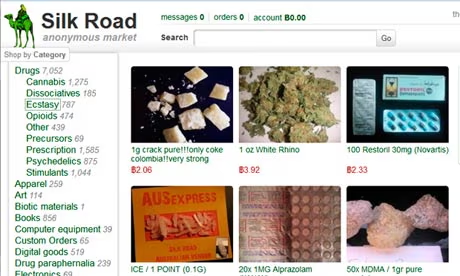
Silk Road was structured like any other e-commerce site. It had product listings, user reviews, and ratings. But instead of electronics or clothing, it offered drugs, fake IDs, and hacking services. Sellers listed their products with detailed descriptions and prices in Bitcoin. Buyers could browse, compare, and purchase just like on Amazon or eBay.
Community and Trust
Despite its illegal nature, Silk Road built a sense of community. User reviews and ratings were crucial. They helped establish trust between buyers and sellers. A good reputation was everything. Sellers with high ratings attracted more buyers, while those with poor reviews struggled. This system of accountability helped maintain a certain standard and reduced scams.
Expansion and Popularity
Silk Road grew quickly. It attracted a global user base eager for a marketplace that promised privacy and freedom. The site’s success was staggering. By the time of its shutdown, Silk Road had facilitated over $1.2 billion in transactions. This wasn’t just a side project—it was a full-fledged operation with significant impact.
Ross Ulbricht’s creation wasn’t just an online marketplace; it was a pioneering use of technology that challenged conventional norms. However, its very success made it a target for law enforcement. The story of Silk Road was just beginning, and the stakes were getting higher.
Products and Services of Silk Road
Primary Focus: Illegal Drugs
Silk Road quickly became known for its extensive selection of illegal drugs. This was the site’s primary focus and what attracted the most users. From marijuana and ecstasy to cocaine and heroin, you could find almost any drug imaginable.
The marketplace offered detailed product descriptions, user reviews, and ratings to help buyers make informed decisions. The quality and variety of drugs available made Silk Road the go-to destination for anyone looking to buy narcotics anonymously.
Other Illicit Goods and Services
While drugs were the main attraction, Silk Road also offered a wide range of other illegal goods and services:
- Forged Documents: Users could purchase fake IDs, passports, and driver’s licenses. These documents were often high quality and difficult to detect as forgeries.
- Hacking Services: The marketplace featured services from hackers offering to break into email accounts, create malware, or provide other cybercriminal activities.
- Stolen Credit Card Information: Silk Road had listings for stolen credit card numbers, allowing users to commit fraud.
- Counterfeit Currency: Fake money, including U.S. dollars and euros, was available for purchase.
- Weapons: Although less common, there were listings for firearms and other weapons. These were tightly controlled and often hidden under coded language to avoid detection.
A Marketplace for the Illicit
Silk Road wasn’t just about drugs. It was a full-fledged black market where users could find almost any illegal product or service. The anonymity provided by Tor and Bitcoin made it a haven for illicit trade. The site’s structure, which included user reviews and ratings, helped establish trust and accountability among its users. This sense of community and reliability contributed to its rapid growth and success.
Ross Ulbricht’s vision had materialized into a thriving marketplace that challenged legal and ethical boundaries. But with great success came increased scrutiny, and law enforcement agencies around the world were beginning to take notice. The story of Silk Road was about to enter a new and dangerous chapter.
Law Enforcement and the Downfall
The Investigation by the FBI and DEA
As Silk Road grew in notoriety, it caught the attention of law enforcement agencies worldwide. The FBI and DEA spearheaded the investigation, recognizing the site’s potential for widespread illegal activity. The complex nature of Silk Road’s operations, shielded by the Tor network and Bitcoin, posed significant challenges.
The investigation was thorough and methodical. Agents monitored online forums, infiltrated the site as buyers and sellers, and followed digital trails. They pieced together clues from various sources, slowly closing in on the mastermind behind the operation.
The Breakthrough
The breakthrough came when agents linked a forum post promoting Silk Road to an email address used by Ross Ulbricht. This small mistake proved crucial. Investigators followed this lead, uncovering more about Ulbricht’s online activities. They discovered that “Dread Pirate Roberts” (Ulbricht’s pseudonym) was managing Silk Road from various locations, making it difficult to track him down.
Ross Ulbricht’s Arrest
On October 1, 2013, the FBI arrested Ross Ulbricht in a San Francisco public library. The arrest was a dramatic end to a two-year investigation. Ulbricht was caught with his laptop open, logged into Silk Road as an administrator. This provided agents with invaluable evidence directly linking him to the site.
The Shutdown of Silk Road
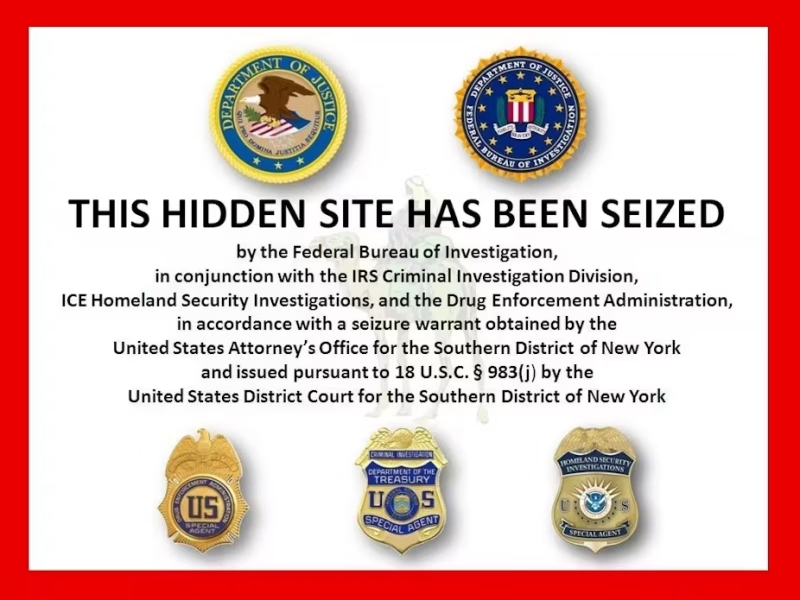
Following Ulbricht’s arrest, the FBI seized and shut down Silk Road. The website displayed a notice from the federal government, announcing its closure. The seizure was a significant victory for law enforcement, signaling the end of one of the most notorious dark web marketplaces.
Legal Proceedings and Sentencing
Charges Against Ulbricht and His Trial
Ross Ulbricht faced several serious charges, including:
- Money Laundering: For using Bitcoin to facilitate anonymous transactions worth millions.
- Computer Hacking: For creating and maintaining a site that enabled illegal activities.
- Conspiracy to Traffic Narcotics: For running a marketplace primarily dealing in illegal drugs.
- Engaging in a Continuing Criminal Enterprise: Also known as the “kingpin” charge, typically reserved for leaders of large-scale drug operations.
- Attempted Murder-for-Hire: Allegations surfaced that Ulbricht had solicited the murder of individuals threatening to expose Silk Road. Although these charges were dropped in the federal case, they played a role in his portrayal during the trial.
The Trial
Ulbricht’s trial began in January 2015 in New York. Prosecutors painted a picture of Ulbricht as a calculating criminal mastermind, while the defense argued that Ulbricht was a scapegoat and that others might have taken control of the site.
Conviction and Sentencing
In February 2015, Ulbricht was found guilty on all counts. In May 2015, he was sentenced to life in prison without the possibility of parole. The harsh sentence was meant to serve as a deterrent to others considering similar ventures.
The takedown of Silk Road and the conviction of Ross Ulbricht marked a significant victory in the fight against dark web criminal activities. However, it also sparked debates about privacy, freedom, and the ethical implications of such a marketplace. The story of Silk Road remains a landmark case in the ongoing battle between law enforcement and the hidden corners of the internet.
The Legacy of Silk Road
Impact on Future Darknet Markets
The shutdown of Silk Road didn’t mark the end of dark web marketplaces. In fact, it set a precedent and blueprint for future sites. Following Silk Road’s closure, numerous other darknet markets emerged, such as AlphaBay, Hansa, and Dream Market. These platforms adopted and improved upon the model established by Silk Road, continuing the trade of illegal goods and services with enhanced security measures to evade detection.
Evolving Tactics

Silk Road’s success and subsequent downfall taught valuable lessons to its successors. They improved operational security, diversified their offerings, and implemented stricter vetting processes for users. The use of multi-signature Bitcoin transactions and more advanced encryption techniques became common. These innovations made it harder for law enforcement to infiltrate and dismantle these marketplaces.
Ongoing Challenges for Law Enforcement
Despite the takedown of Silk Road, law enforcement agencies continue to face significant challenges in combating darknet markets:
- Anonymity and Encryption: The use of Tor and cryptocurrencies like Bitcoin provides a high level of anonymity, making it difficult to trace users and transactions.
- Decentralization: Many newer darknet markets operate on decentralized platforms, further complicating efforts to shut them down.
- Global Reach: These markets operate globally, necessitating international cooperation and coordination, which can be complex and slow.
- Evolving Technologies: Constant advancements in technology mean that law enforcement must continually adapt their strategies and tools to keep up.
Broader Implications for Privacy, Anonymity, and Cryptocurrencies
Privacy and Anonymity
Silk Road sparked a broader conversation about privacy and anonymity online. It highlighted the double-edged sword of these technologies: while they protect personal freedoms and privacy, they can also facilitate criminal activities. The debate continues over how to balance these aspects without infringing on civil liberties.
Cryptocurrencies
Bitcoin and other cryptocurrencies gained significant attention because of Silk Road. These digital currencies offer a way to conduct transactions without traditional financial oversight, appealing to both privacy advocates and criminals. The case of Silk Road demonstrated both the potential and the risks associated with cryptocurrencies.
Regulatory Responses
In response to Silk Road and similar sites, governments and regulatory bodies worldwide have been exploring ways to regulate cryptocurrencies and enhance oversight of online activities. These efforts aim to prevent illegal activities while preserving the benefits of digital currencies and online privacy.
Ethical Considerations
Silk Road also raised ethical questions about the limits of free markets and the role of government in regulating online commerce. Some libertarians argue that Silk Road exemplified the potential for free markets to operate without government interference. Others contend that it showcased the need for regulation to prevent harm and protect society.
Conclusion
Silk Road’s legacy is multifaceted. It revolutionized the concept of online black markets and left a lasting impact on the dark web ecosystem. It also sparked important discussions about privacy, anonymity, and the regulation of cryptocurrencies. As law enforcement continues to battle against similar platforms, the lessons learned from Silk Road remain relevant, highlighting the ongoing tension between technological innovation and legal oversight.
Conclusion
Silk Road was a groundbreaking online marketplace created by Ross Ulbricht, known as “Dread Pirate Roberts.” Launched in 2011, it utilized the Tor network and Bitcoin to facilitate anonymous transactions of illegal goods, primarily drugs. Ulbricht’s libertarian ideals drove him to create a free-market platform that challenged traditional commerce and law enforcement.
Silk Road operated like a typical e-commerce site but with a focus on illegal products and services. It gained rapid popularity, amassing over $1.2 billion in transactions before law enforcement agencies, led by the FBI and DEA, managed to infiltrate and shut it down. Ross Ulbricht was arrested in 2013 and subsequently sentenced to life in prison.
The legacy of Silk Road is profound. It set the stage for future darknet markets, which learned from its successes and failures to become more secure and resilient. The ongoing challenges faced by law enforcement in combating these markets highlight the difficulties in policing the dark web.
Silk Road also sparked significant debate about privacy, anonymity, and the use of cryptocurrencies. It showcased both the potential and the risks of these technologies, leading to discussions about how to balance individual freedoms with societal safety.
In the end, Silk Road’s story is a testament to the complex interplay between innovation, legality, and ethics in the digital age. Its impact continues to be felt, as the issues it raised remain highly relevant in today’s interconnected world.
Commonly Asked Questions
No, Silk Road is no longer available. The FBI shut down the original Silk Road website on October 1, 2013, following the arrest of its founder, Ross Ulbricht. Attempts to revive the site under the same name were also taken down by law enforcement. Today, Silk Road remains defunct.
After Silk Road was shut down, several other darknet markets emerged to fill the void. The most notable successor was Silk Road 2.0, which launched in November 2013 but was also shut down by law enforcement in November 2014. Other prominent darknet markets that followed include AlphaBay, Dream Market, and Hansa Market. Each of these sites continued the model established by Silk Road, providing a platform for the anonymous sale of illegal goods.
No, Silk Road was not legal. The website facilitated the buying and selling of illegal goods and services, including drugs, forged documents, and hacking services. Its operations violated numerous laws related to drug trafficking, money laundering, and computer hacking. As a result, its founder, Ross Ulbricht, was arrested, convicted, and sentenced to life in prison for his role in running the site.



Leave a Reply