
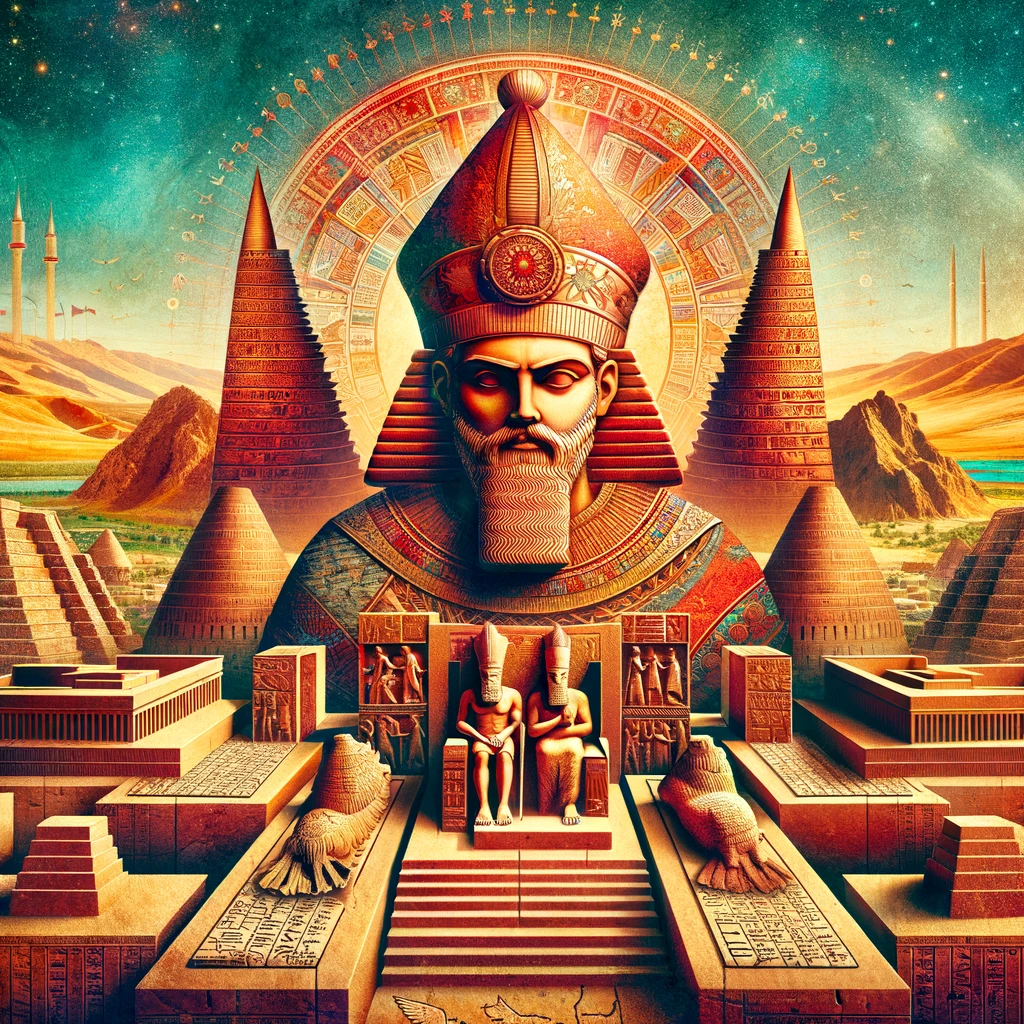
Nestled between the lush banks of the Tigris and Euphrates rivers, Mesopotamia earned its title as the cradle of civilization.
This ancient land, now modern-day Iraq and parts of Syria and Turkey, was where humanity first laid down the foundations of urban life, writing, and, crucially, structured government.
Understanding Mesopotamia’s government isn’t just a journey into the past; it’s an exploration of the dawn of political systems that have shaped human society for millennia.
The study of Mesopotamian government offers invaluable insights into how early humans organized their societies, managed resources, and governed diverse populations. It reveals the complexities of balancing power, law, and social welfare in environments where cities flourished into empires.
By examining Mesopotamia’s governmental structures, we uncover the roots of modern governance, law, and administration, highlighting the enduring legacy of these ancient innovators in today’s world.
Table of Contents
Introduction
The Evolution of Government in Mesopotamia
City-State Governance
The Role of Law in Mesopotamian Society
The Imperial System: Akkadian, Babylonian, and Assyrian Empires
Economic Management and Taxation
Religion and Governance
Conclusion
The Evolution of Government in Mesopotamia
The story of governance in Mesopotamia is a saga of innovation and transformation, stretching from the establishment of the first city-states to the rise and fall of mighty empires. This evolution mirrors the changing dynamics of power, administration, and society in the ancient world.

Sumerian City-States (circa 4500-2334 BC)
The earliest form of government emerged in the Sumerian city-states, independent urban centers like Uruk, Ur, and Eridu. Each city-state was a sovereign entity, ruled by a king who claimed divine sanction. These rulers were responsible for maintaining the city’s security, justice, and religious observance.
Governance was localized, with the city and its surrounding agricultural lands forming the primary political unit.
The Akkadian Empire (circa 2334-2154 BC)
The notion of empire in Mesopotamia first came to fruition under Sargon of Akkad, who unified the Sumerian city-states through conquest. The Akkadian Empire introduced a centralized form of government, overseeing a vast territory through appointed governors.
This period marked a shift from city-state autonomy to a broader, more unified political structure, setting a precedent for future empires.
The Babylonian Empire (circa 1894-539 BC)
The rise of Babylon under Hammurabi further refined the concept of empire and governance. Hammurabi’s Code, one of the oldest deciphered writings of significant length in the world, laid the groundwork for the rule of law, establishing standards for justice that influenced all areas of life.
The Babylonian Empire showcased the role of legislation in governance, ensuring order and fairness in a vast and diverse empire.
The Assyrian Empire (circa 911-609 BC)
The Assyrians took the concept of empire to new heights, focusing on military might and extensive administrative networks.
The Assyrian Empire was known for its ruthless efficiency and sophisticated bureaucracy, managing a vast territory through a centralized system of provinces and governors. Military conquest and fear were used as tools of governance, but so were innovations in communication and administration, ensuring control over distant lands.
From the communal governance of city-states to the imperial machinations of the Assyrians, Mesopotamia’s political landscape was marked by continuous innovation. These shifts in governance not only reflect the changing dynamics of power in the ancient Near East but also set the stage for future forms of government, leaving a lasting legacy on the political structures we know today.
City-State Governance in Mesopotamia
The fabric of Mesopotamian civilization was woven through its city-states, each a beacon of governance, religion, and culture. These city-states were the initial building blocks of Mesopotamian political life, combining urban centers with surrounding agricultural lands into cohesive units of governance.

Structure and Function
Each city-state functioned as an independent entity, with its own governing body, deity, and economic system.
At the heart of the city-state was the temple complex, which served not just as a religious center but also as a hub for economic and administrative activities. The city-state was surrounded by walls, with the urban center including both public buildings like temples and palaces, and private residences.
The rural areas were essential for agriculture, providing the food that sustained the city.
Role of the Ruler
The king stood at the apex of the city-state’s hierarchy, often regarded as a divine agent chosen by the city’s patron god to govern on earth.
This role blended religious duties with secular governance, making the king the supreme priest, warrior, and administrator. The king was responsible for law and order, the city’s defense, and the management of resources and trade. His authority was considered divinely ordained, reinforcing his position as the mediator between the gods and the people.
Administrative and Social Hierarchies
Beneath the king, a structured hierarchy of officials managed the day-to-day operations of the city-state. Priests played a crucial role, overseeing religious ceremonies and managing the temple’s wealth, which often included large tracts of land and control over significant economic resources.
The social structure was stratified, with a clear distinction between the nobility, common citizens, and slaves. The nobility included high-ranking officials and priests who were closely associated with the ruling dynasty. Common citizens comprised artisans, farmers, traders, and soldiers, forming the backbone of the city-state’s economy and defense. At the bottom were slaves, often prisoners of war or people in debt, who worked in both public projects and private households.
This governance model of the city-state laid the groundwork for Mesopotamian society, shaping its development through a blend of divine authority and secular administration. The intricate balance of power, religion, and social order under city-state governance was a hallmark of Mesopotamian civilization, influencing subsequent empires in the region.
The Role of Law in Mesopotamian Society
In ancient Mesopotamia, the introduction of codified laws marked a significant evolution in the governance and societal structure, with Hammurabi’s Code standing out as a pivotal milestone.

Introduction of Hammurabi’s Code
Hammurabi, the sixth king of Babylon, revolutionized Mesopotamian society by introducing a comprehensive set of laws around 1754 BC.
Hammurabi’s Code, engraved on a towering stone stele, detailed nearly 282 laws covering a wide array of subjects, from property rights and contracts to family law and criminal justice. This legal document is one of the oldest deciphered writings of significant length in the world, showcasing the sophistication of early legal systems.
Impact of Laws on Society and Governance
Hammurabi’s Code had a profound impact on Mesopotamian society, establishing a legal standard that sought to achieve justice through a set of prescribed punishments for various offenses. The laws were based on the principle of retribution (“an eye for an eye”) but also considered the social status of the perpetrator and the victim, which influenced the severity of the punishment.
The code regulated aspects of daily life, including marriage, trade, slavery, and agriculture, ensuring that every member of society knew their rights and obligations. It helped to stabilize the society by creating a common understanding of justice and fairness, reducing conflicts and disputes among citizens.
In governance, Hammurabi’s Code reinforced the authority of the king and the state, underscoring the role of the government in legislating and enforcing laws. It demonstrated the capacity of the state to regulate society and protect the well-being of its citizens, setting a precedent for the rule of law that influenced subsequent legal systems in the ancient Near East and beyond.
The introduction and impact of Hammurabi’s Code highlight the crucial role of law in ancient Mesopotamian society, not just in maintaining order and justice but also in shaping the relationship between the government and its people. This legal foundation contributed significantly to the development of civilization, illustrating how codified laws are essential in governing complex societies.
The Imperial System: Akkadian, Babylonian, and Assyrian Empires
The transition from city-state governance to imperial rule in Mesopotamia marked a significant evolution in political organization and power dynamics. This era saw the rise of three major empires: the Akkadian, Babylonian, and Assyrian, each contributing unique advancements in centralization, administration, and military prowess.

Akkadian Empire: The First Empire
Under Sargon of Akkad, the Akkadian Empire (circa 2334-2154 BC) emerged as the world’s first empire, unifying the Sumerian city-states through conquest.
This period introduced a new level of centralization, with Sargon implementing a centralized government that exerted control over the vast territories he conquered. The Akkadian Empire showcased the effectiveness of a strong, centralized authority in maintaining a vast empire, setting a template for future empires.
Administrative Innovations
The Akkadians were pioneers in administrative innovation, developing a system of appointed governors to manage different regions of the empire. This allowed for efficient governance and resource distribution, ensuring the empire’s stability and prosperity. They also standardized weights, measures, and the cuneiform writing system, facilitating trade and communication across the empire.
Babylonian Empire: Law and Culture
The Babylonian Empire, particularly under Hammurabi, is renowned for its significant cultural and legal contributions. Hammurabi’s Code not only provided a comprehensive legal framework but also helped to centralize judicial authority. This period saw the Babylonian Empire expanding its territories and influence, using both diplomacy and military might, while also fostering a rich cultural and religious life.
Assyrian Empire: Military Might and Administration

The Assyrian Empire (circa 911-609 BC) took centralization and military power to new heights.
Known for their fearsome military machine, the Assyrians employed advanced siege techniques and weaponry, enabling rapid territorial expansion. However, it was their administrative system that truly maintained the empire’s vast territories. Through a sophisticated network of provinces and governors, coupled with an effective communication system, the Assyrian Empire managed to exert control and collect taxes efficiently, supporting its military campaigns and public projects.
The Role of Military Power
In all three empires, military strength was crucial not only for territorial expansion but also for maintaining internal stability and protecting trade routes. The development of professional armies and military strategies underscored the importance of defense and conquest in the imperial agenda.
The Akkadian, Babylonian, and Assyrian empires each illustrate the complexities of managing vast territories through centralization, administrative innovations, and the strategic use of military power. These empires laid the groundwork for the concept of empire in human history, demonstrating the potential and challenges of imperial governance.
Economic Management and Taxation in Mesopotamian Empires
The Mesopotamian empires demonstrated sophisticated approaches to economic management and taxation, playing pivotal roles in the prosperity and stability of their societies. These systems reflected the government’s integral role in economic life, from regulating trade to ensuring the efficient collection of taxes.

The Role of Government in Economic Life
In ancient Mesopotamia, the government was deeply involved in the economy. It regulated trade, controlled the distribution of land and water resources, and managed state-owned enterprises, such as weaving workshops and grain storage facilities. This involvement ensured the availability of essential goods, stabilized prices, and facilitated trade both within the empire and with foreign lands.
One of the key economic roles of the government was to maintain and manage irrigation systems. These systems were crucial for agriculture in the arid Mesopotamian climate, and their maintenance required coordinated efforts that only a centralized authority could effectively oversee.
Tax Systems
Taxes were a fundamental aspect of economic life, serving as the primary means for governments to generate revenue. In Mesopotamia, taxes were levied on various activities and possessions, including agricultural produce, livestock, and commercial transactions. Taxation also took the form of corvée labor, where individuals were required to work on public projects, such as temple construction or canal maintenance, for a certain period each year.
The tax system was intricately linked with the recording and writing systems developed in Mesopotamia. Officials kept detailed records of taxable goods and individuals’ tax liabilities, showcasing an early form of bureaucratic administration.
Impact on Society
The taxation and economic policies of Mesopotamian governments had significant impacts on society. While taxes were necessary for funding public works, defense, and administration, heavy taxation could lead to social unrest or economic strain on the population. The fairness and efficiency of tax collection often reflected the government’s stability and legitimacy.
In times of prosperity, effective economic management and fair taxation policies contributed to societal wealth and the flourishing of culture and arts. However, in periods of mismanagement or external pressure, the burden of taxation could exacerbate social inequalities and contribute to political instability.
Through their advanced systems of economic management and taxation, the Mesopotamian empires laid the groundwork for modern economic policies and statecraft. These systems highlighted the delicate balance between the need for revenue and the welfare of the citizenry, a challenge that remains relevant in economic policy today.
Religion and Governance in Mesopotamia
In ancient Mesopotamia, the lines between religious and political authority were deeply intertwined, reflecting a worldview where the divine and the mundane were inseparable. This fusion played a pivotal role in governance, influencing laws, administration, and even military conquests.

The Intertwining of Religious and Political Authority
Mesopotamian rulers often portrayed themselves as chosen by the gods or even as deities themselves. This divine sanction was crucial for legitimizing their power and decisions. Kings were not just political leaders but also played key roles in religious ceremonies, embodying the connection between the gods’ will and the state’s welfare. Such a relationship meant that political authority was often seen as an extension of divine order, with rulers acting as mediators between the gods and their people.
Priests and Temples in Governance
Priests held significant sway in Mesopotamian society, managing the temples, which were centers of both worship and economic activity. Temples owned vast tracts of land, engaged in large-scale trade, and employed thousands of workers, including craftsmen, farmers, and laborers. The economic power of the temples complemented their religious significance, making priests key figures in governance and administration.
The temple’s role extended beyond economic activities; it was also involved in social services, such as supporting the poor and the widows. Priests, therefore, were not only religious leaders but also administrators and bureaucrats, integral to the functioning of Mesopotamian cities and empires.
Impact on Society
The intertwining of religious and political authority had a profound impact on Mesopotamian society. It ensured that religious institutions remained central to social, economic, and political life, shaping laws, education, and even military endeavors. For instance, omens and divinations performed by priests could influence military campaigns or the construction of public works.
This integration also meant that religious reforms or shifts in worship could have wide-ranging implications for governance and societal structure. Changes in the pantheon or the elevation of certain gods over others could reflect or instigate shifts in political power and territorial control.
In Mesopotamia, religion and governance formed a complex web that defined the ancient world’s societal norms and values. This symbiotic relationship underscored the belief that divine favor was essential for prosperity and stability, a concept that influenced many subsequent civilizations.
Conclusion: The Legacy of Mesopotamian Government Structures
The government structures of ancient Mesopotamia have left a profound legacy, influencing political organization, legal systems, and administrative practices throughout history.
The concepts of law and governance introduced by Mesopotamians, such as Hammurabi’s Code, have become foundational to modern legal principles, emphasizing justice and the rule of law.
Their innovations in centralization, economic management, and the integration of religious authority with governance have shaped the development of subsequent civilizations and continue to resonate in contemporary political thought.
Mesopotamia’s enduring influence demonstrates the civilization’s significant role in the evolution of societal structures and governance, highlighting its importance in the tapestry of human history.
Related Content:
Ancient Civilizations Timeline: A Beginner’s Overview
Unearthing Mesopotamia: Cradle of Civilization
Commonly Asked Questions
Mesopotamia featured various forms of government throughout its history, primarily characterized by monarchies. These ranged from the governance of city-states by kings in the early Sumerian period to the more centralized imperial administrations of the Akkadian, Babylonian, and Assyrian empires. Leadership often combined both secular and religious authority, with kings acting as both political leaders and high priests.
Mesopotamian governance could be described as a theocratic monarchy. Kings ruled with the belief that they were chosen by or were representatives of the gods, merging religious authority with their political power. This theocratic element meant that religious institutions played a significant role in governance and daily life, with the king often performing crucial religious duties.
The city-states in Mesopotamia were governed by kings, who had absolute power over their territories. These kings were supported by a hierarchy of officials who helped manage the state’s affairs, including its economy, military, and religious practices. The government of each city-state was centered around the temple, which was not only a religious center but also a hub for economic and administrative activities.
Ancient Mesopotamia was not a democracy in the way we understand the term today. Governance was based on a monarchical system, where kings held supreme authority, and there was no system of elected representation like in modern democratic societies. However, there were instances of assembly-like gatherings, particularly in early Sumerian city-states, where citizens could have a voice in community matters. These assemblies, however, did not constitute democracy in the classical or modern sense.



Leave a Reply