
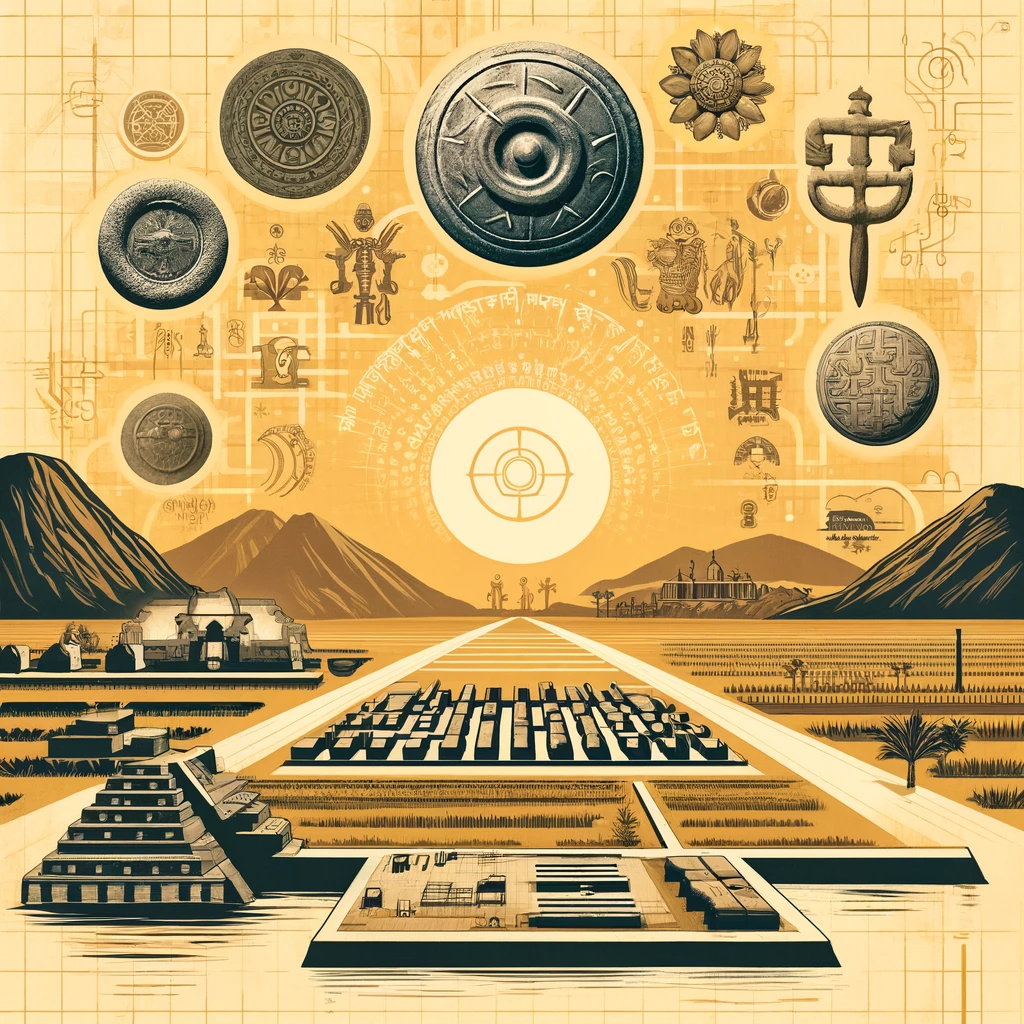
The Indus Valley Civilization was a big deal, way back in ancient times. Imagine cities that were already rocking sophisticated living around 2500 to 1900 BC. This civilization spread out over what’s now Pakistan and parts of northwest India.
They had it all figured out: big, organized cities, impressive buildings, and a way of life that was way ahead of its time. Think about living in a place with its own plumbing system when most of the world was still figuring out how to live together.
That’s the kind of advanced thinking we’re talking about. It was one of the world’s first big urban cultures, standing tall alongside ancient Egypt and Mesopotamia. Seriously impressive stuff!
Table of Contents
Introduction
Discovery and Excavation
Urban Planning and Architecture
Economy and Trade
Social Structure and Daily Life
Writing and Communication
Religious Beliefs and Practices
Decline and Legacy
Conclusion
Discovery and Excavation: Unearthing a Lost Civilization
Before the 1920s, nobody really knew the Indus Valley Civilization was a thing. Then, boom! Archaeologists hit the jackpot in Pakistan. They found Harappa and Mohenjo-Daro, two ancient cities that were seriously advanced for their time.

The Big Dig
Digging into these sites was like opening a time capsule from 4,500 years ago. At Harappa and Mohenjo-Daro, they uncovered streets laid out in a grid, houses with their own bathrooms, and even a massive public pool. The level of planning and sophistication was off the charts.
Who Made It Happen
A couple of key players in this discovery were Sir John Marshall and Sir Mortimer Wheeler. These guys were like the Indiana Joneses of their day. Marshall kicked things off, leading the charge in the 1920s. Then Wheeler stepped in, bringing his own flair to the digs in the 1940s. They both played huge roles in bringing the world’s attention to the Indus Valley Civilization.
This discovery wasn’t just cool; it changed how we see ancient history. Harappa and Mohenjo-Daro showed us that the people of the Indus Valley were playing in the big leagues with the ancient Egyptians and Mesopotamians.
Urban Planning and Architecture: The Indus Valley Blueprint
The folks in the Indus Valley were master planners. They built their cities like a giant chessboard, with everything laid out in a neat grid. Streets were straight, wide enough for carts, and ran north-south or east-west. It wasn’t just for looks; it made getting around super easy and kept things organized.

Ahead of the Game in Drainage
These ancient city planners were all about cleanliness and convenience. They had a killer drainage system that would make modern cities jealous. Every house was connected to a network of covered drains that whisked away wastewater. Think about that the next time your sink clogs.
Chilling at the Great Bath
The Great Bath of Mohenjo-Daro was like the ancient version of a community pool, but way cooler. It was a massive, watertight structure where people probably went for ritual baths. Imagine taking a dip there and just soaking in the history.
Fortified and Fancy
These cities weren’t just about practicality; they also had some serious style. Places like Mohenjo-Daro had citadels — big, fortified areas on raised ground where the important buildings were. We’re talking about granaries, workshops, and maybe even palaces. It showed that these folks meant business and had the architectural chops to back it up.
The Indus Valley folks were on another level with their city planning and architecture. They built cities that were not only functional but also sustainable and beautiful. That’s some serious ancient ingenuity right there.
Economy and Trade: The Business Side of the Indus Valley
Farming: The Bread and Butter
At its heart, the Indus Valley was all about farming. They had the golden touch when it came to growing crops, thanks to the fertile land along the river. We’re talking wheat, barley, and peas — the essentials. Plus, they were pretty savvy with water management, using irrigation to make the desert bloom.
Animal Husbandry: Not Just Petting Zoos
These folks were also big on domesticating animals. Cattle, buffalo, sheep, goats — you name it, they raised it. This wasn’t just for fun; it was a major part of their economy, providing meat, milk, and muscle power for farming and transport.
Craft Industries: The Makers
The Indus Valley people were skilled artisans. Beads, pottery, tools, and textiles — they made it all. Their craft goods weren’t just practical; they were works of art. And they weren’t just keeping these beauties for themselves; they were trading them far and wide.
Trade Networks: Going Global
Speaking of trade, these ancient traders were networking pros. They didn’t just stick to their own backyard; they reached out to Mesopotamia and the Persian Gulf. They traded their crafts for luxury goods like metals and precious stones. This wasn’t your average neighborhood swap meet; it was the ancient equivalent of global trade.
The Indus Valley Civilization had the economy game figured out. From their farms to their markets, and all the way across the seas, they built a strong foundation that kept their society thriving. They were the ancient world’s entrepreneurs, making the most of what they had and reaching out to make connections across continents.
Social Structure and Daily Life: Inside the Indus Valley
Who’s Who: Piecing Together Society
Figuring out the social ladder in the Indus Valley is a bit like detective work, with archaeology giving us the clues. There weren’t any obvious palaces or big flashy tombs, suggesting folks might have been more equal than in other ancient societies. But, they definitely had some sort of organization – you don’t get cities this advanced without some people calling the shots. Probably, there were leaders or elites, skilled workers like artisans and merchants, followed by farmers and laborers making up the backbone.

Home Sweet Home
When it came to housing, these people knew how to live. Most folks had homes made of baked brick, with rooms around a central courtyard. Think privacy, airy spaces, and even private wells for some. And yeah, they had bathrooms – with actual drainage systems!
Eating Like a King (or Commoner)
Their diet was pretty balanced. They chowed down on a lot of grains like wheat and barley, which were staples. But they also had fruits, vegetables, and dairy products from their animals. Meat was on the menu, too, though probably more for special occasions or for those higher up the social ladder.
Fashion and Bling
These folks had style. They wore cotton and wool, which they could spin and weave themselves. Jewelry wasn’t just for the ladies; men rocked it too. Beads, bangles, earrings – made from everything from clay to precious stones. It was all about showing off your status and skills.
Daily Grind
A day in the life of an Indus Valley citizen involved a lot of work, but they balanced it with some play. After taking care of the home, working the fields, or crafting goods, they’d hit up the local market or chill by the Great Bath. Kids probably played with toys like little carts, and everyone enjoyed music and dance.
Life in the Indus Valley Civilization was organized yet vibrant. Their cities were planned to a T, but there was room for individual flair in homes, fashion, and even food. It was a society that valued community, cleanliness, and a touch of elegance – not too shabby for over 4,000 years ago!
Writing and Communication: The Indus Valley Script Mystery
The Puzzle of the Script
The Indus Valley folks left us a bit of a head-scratcher – their script. Despite being one of the earliest writing systems, it’s still undeciphered. Picture this: thousands of symbols, but no one can read them yet. It’s like they sent us a message through time, and we’re still trying to crack the code.

Clues Left Behind
What we’ve got are seals, pottery, and metal objects covered in these symbols. The seals, especially, are intriguing – carved from stone and often featuring animals alongside the script. They might have been used for trade, to stamp goods, or as some sort of ID. It shows they were communicating, doing business, and maybe even writing their names down.
Guessing Game: What Were They Saying?
So, what were they talking about in all these inscriptions? Without a Rosetta Stone to help us out, it’s a lot of educated guesses. Some think it might be about trade, goods, or even religious practices. Others speculate it could be a form of early administrative record-keeping. The truth is, until we crack the script, it’s anyone’s guess.
The mystery of the Indus Valley script is a big puzzle waiting to be solved. It’s a glimpse into their world, showing us they had a sophisticated system of communication. But until we figure out what they were saying, we’re just outsiders looking in, marveling at the complexity and depth of their civilization.
Religious Beliefs and Practices:
Worship and Whispers
The spiritual life of the Indus Valley folks is a bit like a puzzle with missing pieces. No grand temples like in other ancient cultures, but that doesn’t mean they weren’t spiritual. What we’ve got are artifacts and seals that give us sneak peeks into their beliefs.

Gods or Symbols?
Among the symbols, one figure stands out – often thought to be a deity, shown sitting cross-legged, surrounded by animals. Some call him a “Proto-Shiva,” linking him to later Hindu traditions. Then there’s the “Mother Goddess,” hinting at fertility worship. But without written records, we’re mostly connecting dots and making educated guesses.
Sacred Seals and Pottery
The seals are like little windows into their world, often stamped with animals and symbols that must have meant something big to them. Bulls, elephants, and rhinos – these weren’t just random choices. They had to symbolize important aspects of life or divinity. Pottery, too, carries marks and motifs that could tell stories of their cosmic beliefs or rituals.
The Great Bath: A Ritual Site?
Take the Great Bath of Mohenjo-Daro – it’s this massive, watertight pool. Was it just for a quick dip to cool off? Probably not. More likely, it was for ritual cleansing, a sacred practice to purify body and soul. It hints at a society where cleanliness and perhaps a form of water worship played a significant role.
The religious life of the Indus Valley Civilization is shrouded in mystery, but the clues left behind paint a picture of a people deeply connected to nature, animals, and possibly the cosmos. Their symbols and artifacts whisper stories of their beliefs and practices, inviting us to wonder and piece together the spiritual life that once thrived in the ancient cities of the Indus.
Decline and Legacy: The Echoes of the Indus Valley
The Great Mystery: Why Did It End?
The curtain call for the Indus Valley Civilization is one of history’s great mysteries. Around 1900 BC, this advanced society began to fade. Why? Well, theories abound. Some say changing climate and river patterns made farming tough. Others point to potential invasions or internal social upheaval. Then there’s the idea that earthquakes disrupted their water systems. Truth is, we don’t have a clear answer, just a lot of educated guesses.
A Legacy That Lives On
Despite its disappearance, the Indus Valley Civilization didn’t just vanish into thin air. Its fingerprints are all over South Asian history. The way they built their cities, with advanced planning and infrastructure, set a standard. Their artistic motifs and possibly even elements of their beliefs seeped into the cultures that followed, influencing the tapestry of Indian civilization.
Influencing Future Generations
The craft techniques, agricultural practices, and maybe even snippets of their language and traditions were absorbed by later societies in the region. As the Aryans moved into the Indian subcontinent, it’s likely they mixed with the remnants of the Indus Valley people, blending cultures.
A Foundation Stone for South Asia
Today, the Indus Valley Civilization is celebrated as one of the great cradles of civilization, alongside Mesopotamia, Egypt, and China. Its study, known as Indology, attracts scholars fascinated by its achievements and mysteries. This ancient civilization’s spirit, encapsulated in its ruins, continues to inspire and intrigue, reminding us of the enduring legacy of human ingenuity.
The story of the Indus Valley Civilization is a testament to the resilience and complexity of ancient societies. Its decline might remain a puzzle, but its legacy is clear, etched into the very foundation of South Asian culture and history, influencing generations long after its cities fell silent.
Conclusion: Unraveling the Indus Valley Enigma
Diving into the Indus Valley Civilization isn’t just about satisfying our curiosity for the ancient world. It’s about understanding the roots of urban life, the challenges and triumphs of creating a society from scratch. This civilization, with its sophisticated cities, complex economy, and enigmatic script, offers a unique lens through which we can explore the evolution of human societies.
Unpacking the mysteries of the Indus Valley is crucial for several reasons. First, it broadens our perspective on ancient urban planning, showing us that efficient cities, with their grid layouts and advanced infrastructure, weren’t just a feature of the Roman or Greek worlds. The Indus Valley folks were pioneers in creating livable, sustainable urban spaces.
Second, it challenges us to think about the rise and fall of civilizations. Understanding why a society as advanced as the Indus Valley could disappear helps us grasp the fragility of human cultures. It’s a stark reminder that environmental shifts, social turmoil, and external pressures can dramatically alter the course of history.
Lastly, it connects us to our shared human heritage. The Indus Valley Civilization, with its unanswered questions and legacy, is a part of the story of us all. It’s a chapter in the book of human achievement, showcasing what our ancestors were capable of thousands of years ago.
Peeling back the layers of the Indus Valley Civilization isn’t just an academic exercise; it’s a journey into the heart of human ingenuity and resilience. As we continue to decode its secrets, we not only pay homage to a lost world but also learn lessons that resonate in our own time, reminding us of the incredible journey of human civilization.
Related Content:
Ancient Egypt: A Journey Through Time
Ancient Civilizations Timeline: A Beginner’s Overview
Unearthing Mesopotamia: Cradle of Civilization
Commonly Asked Questions
The Indus Valley Civilization is renowned for its advanced urban planning, sophisticated drainage and sewage systems, and the development of one of the world’s earliest writing systems, though it remains undeciphered. It had major cities like Harappa and Mohenjo-Daro, known for their grid layouts, impressive public baths, and overall urban infrastructure. This civilization was also notable for its crafts, including beadwork, pottery, and metallurgy, and its extensive trade networks with neighboring regions.
The Egyptian civilization is older. The beginnings of Egyptian civilization can be traced back to around 3100 BC with the unification of Upper and Lower Egypt under the first pharaoh. In contrast, the Indus Valley Civilization flourished a bit later, with its major urban phase around 2600 BC. Though there were pre-urban cultures in the Indus Valley area that date back earlier, the peak period of the Indus Valley Civilization is generally considered to be slightly later than the formation of the early dynastic period in Egypt.
No, the Indus Valley Civilization does not still exist. It declined around 1900 BC, and its major cities were abandoned by around 1700 BC. The reasons behind its decline are still a subject of research and debate, with theories including climate change, overexploitation of resources, and possibly invasions. While the civilization itself has vanished, its discoveries and archaeological remains have had a lasting impact on understanding the ancient world, and its legacy continues to influence the culture and history of the Indian subcontinent.



Leave a Reply